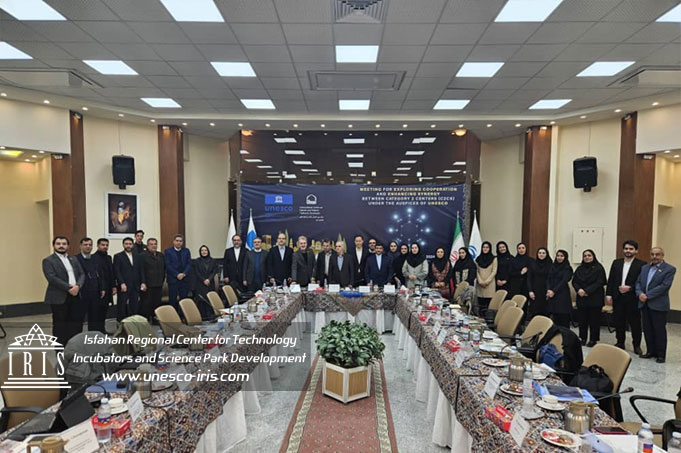
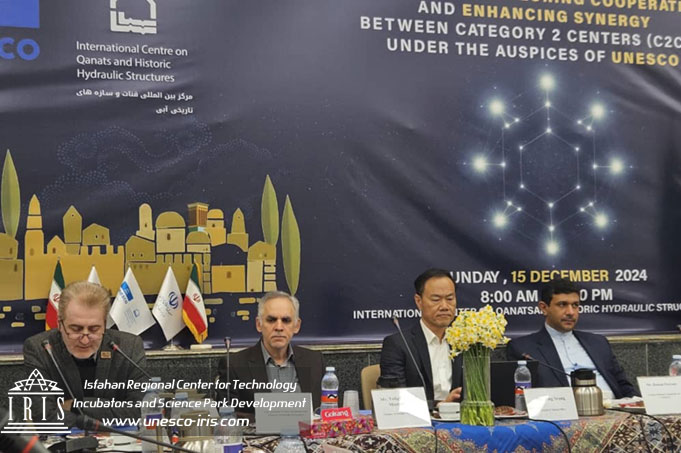
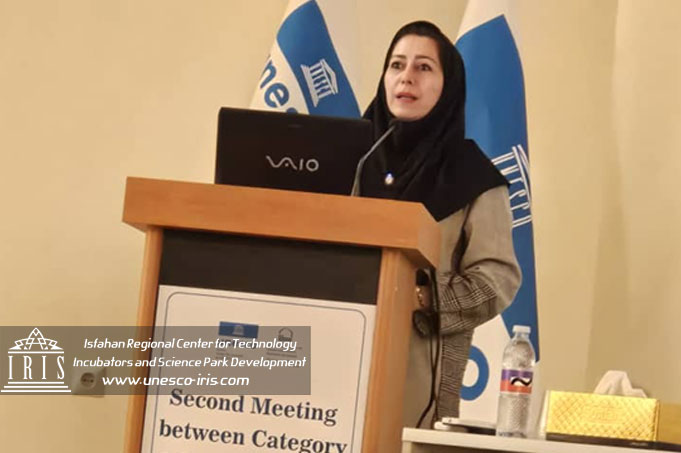
The second meeting of UNESCO Category 2 Centers in Iran was hosted by and successfully held at the International Center for Qanat and Historic Hydraulic Structures (ICQHS) on December 15, 2024 in Yazd. The event, attended by directors and experts from UNESCO Category 2 Centers in Iran, as well as representatives of other related centers, UNESCO Tehran Office and the Iranian National Commission for UNESCO, aimed to create a platform for sharing achievements and strengthening cooperation among these centers.
This valuable opportunity facilitated the development of shared strategies and highlighted key issues such as funding challenges, international relations, the need to review activities and identify weaknesses, enhancing the capacities of centers at the national level, expanding activities to the international level, and aligning activities with international standards.
During the meeting, Mozhgan Yazdianpour from the Regional Center for Technology Incubator and Science Park Development (IRIS) introduced the center's activities and outlined the steps taken by IRIS at the international level. IRIS expressed its readiness to collaborate with other centers.
Some High-ranking officials, including the Iranian Ambassador to UNESCO - Dr. Pakatchi- in the online format, the Secretary-General of the Iranian National Commission for UNESCO -Dr. Fartoosi- the Director of the UNESCO Office in Tehran- Mr. Ieng Srong - and representatives from the Ministry of Foreign Affairs, were present at the meeting.
Hassan Fartosi, Secretary-General of the Iranian National Commission for UNESCO, and Ieng Srong, Director of UTO emphasized the importance of Category 2 Centers within the global UNESCO network. They underlined the significance of establishing connections to access global C2C knowledge and stated that challenges require collective efforts.
C2Cs can contribute to the country's sustainable development and the enhancement of public culture, they added.
The program ended with two specialized roundtables: the first focused on strengthening international cooperation, while the second centered on enhancing domestic cooperation among the centers.